
The Bot Company
Robo-Maids are Coming

I personally spend about one hour per day on household chores between cleaning, laundry, cooking, and sprucing — and I live in a 1BR apartment in New York. The average woman in the U.S. spends over 2 hours per day on household chores.
I am sure there are plenty of folks out there that value their time at or above $25/hr and would be willing to spend $50/day or $1,500/mo or $18,000/year in order to get hours back that would’ve otherwise been spent on household chores. With those numbers, the chorebot market starts to look a lot like the car market.
You ever think about how much general maintenance it takes to just be a respectable human person?
You gotta get up, eat breakfast, shower, brush your teeth, floss, get dressed in clean clothes, put on deodorant, pack a lunch, and set off to be at your office on time.
And that’s just baseline respectability.
But our living spaces need maintenance too. And if you’re anything like me, the little tasks like laundry, cleaning, and dishes take second priority to creative endeavors like writing, essential endeavors like working, and basic body maintenance.
Entropy is a cruel mistress, and demands that everything tends toward disorder.
Which is why this morning my sink is full of dishes, my bathroom has wet towels on the floor, and I sniffed my shirt before putting it on.
But what if we had a tool that could battle entropy on our behalf?
Rosie
The Jetson’s first aired on September 23, 1962 replete with future every-man George, his homemaker wife Jane, their children, Judy and Elroy, and their robotic maid Rosie.
Residents live in sky houses, work three-day workweeks, drive aerocars that look like flying saucers, and have incredible conveniences that leave them with plenty of leisure time.
My favorite thing is when science fiction becomes science fact. Because this is exactly what Kyle Vogt, former CEO and co-founder of self-driving car company Cruise, is doing.
Vogt recently launched a new robotics startup called The Bot Company. The company has raised $150 million in funding from prominent investors like Nat Friedman, Daniel Gross, Nabeel Hyatt, Patrick and John Collison, and Quiet Capital with the goal of creating "bots that do chores so you don't have to."
The company is exploring various form factors, including humanoid robots, to tackle tasks like cleaning and laundry.
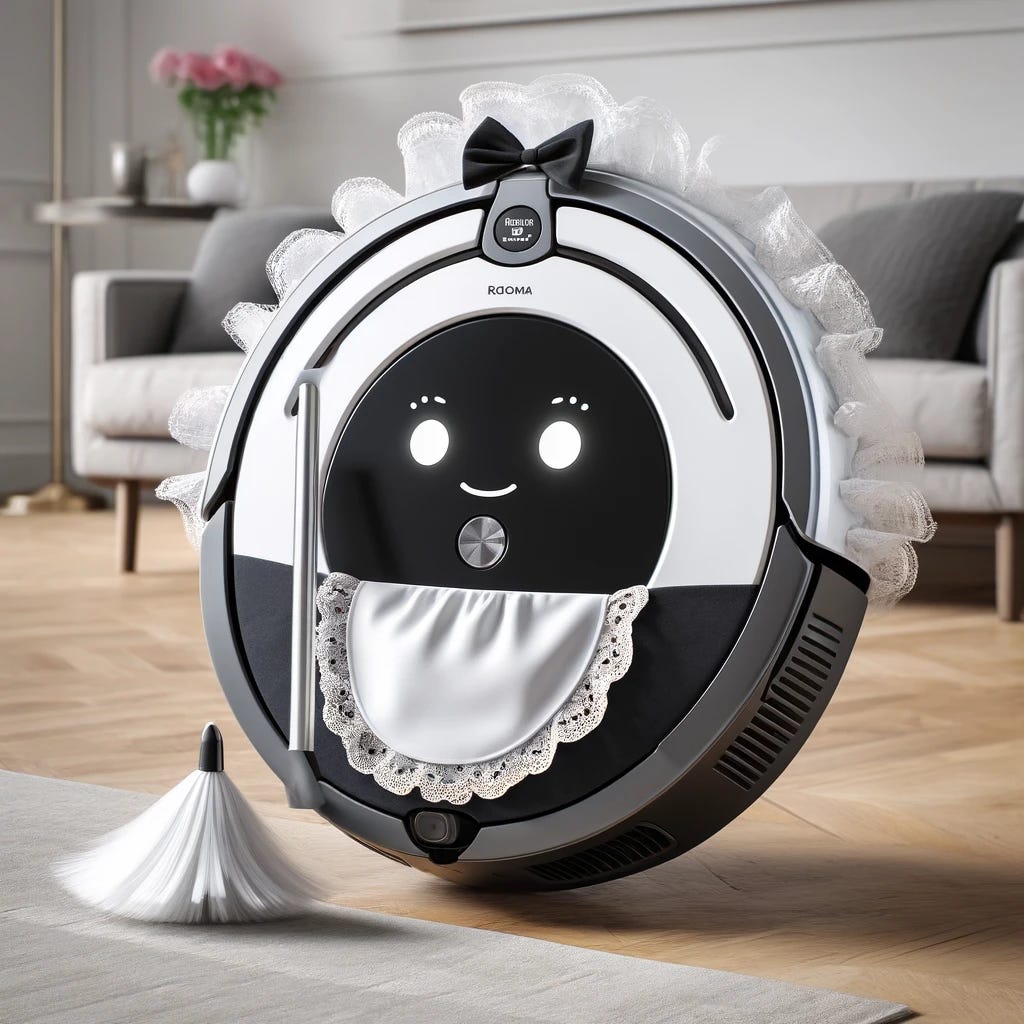
I don’t know about you, but my favorite part of cleaning the kitchen is when I click the button on my Roomba to do it for me.
Vogt has assembled a cracked team of experienced roboticists, AI experts, and hardware implementers including Paril Jain, former AI tech lead at Tesla, and Luke Holoubek, former Cruise software engineer, to help bring this vision of the future into reality.
Science Fact
So how did we go from science fiction to science fact?
Computer Vision and Object Recognition
These robots would use advanced computer vision systems and deep learning models to visually identify and locate objects like toys, clothes, dishes etc. within the home environment. This allows them to recognize the items they need to interact with.
Robotic Manipulation and Grasping
They would employ dexterous robotic arms and grippers with tactile sensing capabilities to grasp, pick up, and manipulate objects of various shapes, sizes, and materials like humans do. Force control algorithms help handle fragile objects carefully.
Mobile Navigation
Mobile robotic platforms with sensors like cameras and lidars allow the robots to navigate through the home, avoid obstacles, climb stairs etc. while carrying out tasks.
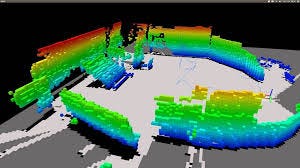
Simultaneous localization and mapping (SLAM) helps build 3D maps of the environment.
Natural Language Processing (NLP)
NLP models allow the robots to understand voice commands and instructions in natural language from humans. They can parse the intent behind requests like "Pick up the toys in the living room."
Imitation Learning
Techniques like imitation learning, where the robot learns from demonstrations by humans, could allow these systems to acquire the skills necessary for performing complex household tasks like cleaning, laundry folding, or even cooking meals.
Conclusion
We all personally spend at least one hour per day on household chores between cleaning, laundry, cooking, and sprucing.
And what’s more, the average woman in the U.S. spends over 2 hours per day on household chores.
Just imagine what that number looked like before modern convenience appliances like dishwashers, washing machines, dryers, and Roomba’s.
I agree with Packy McCormick that there are plenty of folks out there that value their time at or above $25/hr and would be willing to spend $50/day or $1,500/mo or $18,000/year in order to get hours back that would’ve otherwise been spent on household chores.
With those numbers, the chorebot market starts to look a lot like the car market, with attractive financing options for consumers.
And in the enterprise space, there could be cleaning companies that would have a fleet of these robots that you could lease out or hire for the day.
As with every new technology, there will be an adoption curve, but this is the type of thing we techno-optimists keep preaching about:
Leveraging technology to solve real problems so we can free up more time for the things we really want to do.
Don’t fight with entropy. Out source it to your Rosie.
Can't wait!!! Also can Rosie dock herself into the charging station?
I need a Rosie!!!!